
Science Communication
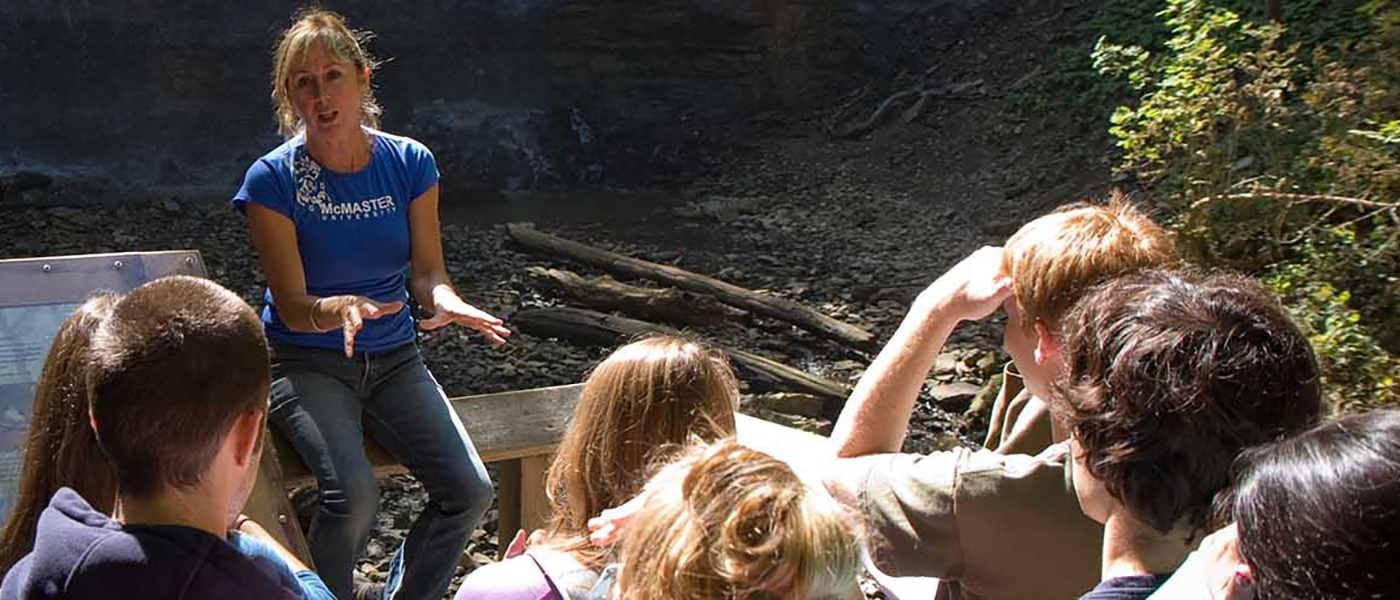
Communication is a critical part of the scientific process: It is how scientists share their discoveries with each other and non-scientists alike. Science communication helps us better understand ourselves, each other and the world in which we live. The landscape of science communication is changing, and scientists and science communicators face new challenges in reaching and engaging varied audiences. Our faculty pursue research aimed at understanding these challenges. We also explore how science communication in its various forms shapes perceptions of important issues in science and health.
Information Box Group
Kimberley Dej
Associate Professor
Summary:
Associate Professor
Associate Member, Biology
Dr. Kim Dej completed her undergraduate at the University of Toronto (St. George) in the Molecular Genetics program with a Major in Zoology and a Minor in Botany. During this time she developed an interest in genetics, chromosome structure, and transposable elements. She completed her PhD at Johns Hopkins University with Allan Spradling (Carnegie Institute of Washington) and went on to be a postdoctoral fellow at MIT with Terry Orr-Weaver (Whitehead Institute for Biomedical Research). She joined the McMaster community in 2004 where her teaching has focused on genetics, cell biology, research methods, undergraduate laboratory experiences, in addition to community engagement and science communication. Dr. Dej has taught in the Life Sciences program since 2009 and she has been a part of the evolution of the program. She has won several teaching awards including the McMaster President’s Award for Outstanding Contributions to Teaching and Learning, a McMaster Student Union Award (Science), an OCUFA Teaching Award, and a YWCA Woman of Distinction Award for Education and Mentorship.
Research Interests:
nematode biodiversity; authentic lab research and the undergraduate experience; peer-mentorship and undergraduate student engagement; digital storytelling and student learning
Dr. Dej’s lab research with undergraduate students has focused on the cell cycle in Drosophila melanogaster and biodiversity in nematode species. In 2015 Dr. Dej became a MacPherson Teaching Fellow, which has allowed her to identify and expand independent undergraduate research opportunities on campus. This has been possible by focusing on training (the interactive Nematode Diversity Project eBook lab manual), space (The Applied Learning Lab for Undergraduate Research Excellence, or ALLURE), and funding (small grants that encourage peer-learning and collaboration in undergraduate thesis research). This is part of her broader interest in providing authentic research opportunities embedded in courses for undergraduates even in large courses and assessing the role these experiences play in engaging students. These opportunities are illustrated by development of the Amylase Gene Project (with Alastair Tracey, BIOL1A03), Personal Genome Testing (with Mihaela Georgescu, MOLBIOL2C03), and the development of the Living Systems Lab in the School of Interdisicplinary Science (various student, staff, and faculty collaborators, LIFESCI2L03 & LIFESCI3L03). In 2016 to 2018, Dr. Dej was a MIIETL Leadership in Teaching and Learning (LTL) Fellow. She has used this as an opportunity to partner with students in curriculum development, including assessing the impact on student engagement and learning of cohort-building and scaffolded peer-mentorship within interdisciplinary streams in the Life Sciences program. In partnership with the McMaster Children and Youth University (MCYU) and MacPherson student partners, Dr. Dej is leading the development of ebooks for elementary and middle-school students. Within this project, research is focused upon measuring the impact of the interactive digital storytelling on the learning in addition to the impact of community-engaged learning on university students.
Courses:
CMTYENGA2A03: Foundations in Community Engagement
LIFESCI4N03 (Visualizing Science)
LIFESCI2G03: Genes, Genomes, and Society
Discovery Program (through Arts & Science program)
Alexander Hall
Assistant Professor
Summary:
Dr Alexander Hall is a science communication expert whose work explores the history of science in popular media. With an interest in the role of science in society, he is committed to empowering more active participation and engagement with science across diverse communities. He has an extensive track record working on large multidisciplinary research projects, is a co-founder of the International Research Network for the Study of Science & Belief in Society, and a former History of Science Section Recorder for the British Science Association.
Research Interests:
Science communication, history of science, media studies, science and technology studies, environmental history
Dr Hall’s research traces how scientists have gained positions of expertise in society and used the media to communicate complex theories to the public. Focussing on the history of science in popular media, Dr Hall has published on a wide range of subjects from the history of evolution on TV and radio, to the importance of narrative in communications on climate change.

Ayesha Khan
Associate Professor
Summary:
Associate Director (Curriculum & Pedagogy),
Joint Appointment, Psychology, Neuroscience & Behaviour
Dr. Ayesha Khan has a Ph.D. in behavioural neuroendocrinology during which she investigated the influence of in utero, dietary, and social factors on time to sexual maturity in developing females. Her research has been published in journals such as Reproduction, Physiology & Behavior, Reproduction, Fertility and Development, Hormones and Behavior, and Hormone and Metabolic Research. Her passion for teaching is largely driven by the interactions she has with the enthusiastic and inquisitive students she meets on a regular basis. She teaches a variety of courses covering topics such as animal behaviour, physiology of reproductive behaviour, and neuropsychology. Dr. Khan has taught in the Life Sciences program since 2013. Her teaching has been recognized through the McMaster Student Union Award for her work in community engaged education as well as through the McMaster President’s Award for Outstanding Contributions to Teaching and Learning.
Research Interests:
Student experience with community-engaged education; impact of institutional policies on student mental health; hormones and behaviour.
Dr. Khan’s research interests explore ways through which the undergraduate student experience is enhanced by incorporating experiential education in large enrollment courses. As part of a multi-institutional initiative, she is also investigating the impact of the newly implemented Fall Break on student mental health. She has received funding from the Forward With Integrity Initiative at McMaster University to create an online strategy to disseminate information about community-engaged education. In previous years, she has served as a Research Fellow at the Paul R. MacPherson Institute for Leadership, Innovation & Excellence in Teaching.
Courses:
LIFESCI 2D03
LIFESCI 3E03
LIFESCI 4X03

Katie Moisse
Associate Professor
Associate Director Life Sciences Program
Summary:
Dr. Katie Moisse is a science journalist teaching science communication in the School of Interdisciplinary Science. Her stories have appeared in Scientific American, Spectrum and The Atlantic. She was Digital Health Editor for ABC News, leading the network’s national online coverage of countless outbreaks and other important health stories. She has a Ph.D in pathology from the University of Western Ontario, an M.Sc. in neuroscience from King’s College London and an M.Sc. in journalism from Columbia University.
Research Interests:
Science communication, media, global health, public health
Dr. Moisse’s research examines the role of the media in shaping perceptions about health and science among non-scientists, as well as the role of creative storytelling in enhancing science comprehension and curiosity.
Courses:
LIFESCI 2AA3
LIFESCI 2G03
LIFESCI 3P03
LIFESCI 3Q03
LIFESCI 3XX3
LIFESCI 4J03
LIFESCI 4L03

Katie Moisse
Associate Professor
Associate Director Life Sciences Program
Janet Pritchard
Assistant Professor
Summary:
Dr. Pritchard completed a PhD in Medical Sciences (Physiology and Pharmacology) at McMaster University and a postdoctoral fellowship in the Department of Medicine, Division of Geriatrics. The focus of her PhD and postdoc work was on the assessment of bone quality in older adults with type 2 diabetes, the assessment of frailty in clinical practice, and on the use of electronic decision support systems for the dissemination of clinical practice guidelines. Dr. Pritchard teaches in the Life Sciences and Kinesiology Programs.
Research Interests:
aging, nutrition, protein, sarcopenia, frailty, osteoporosis, type 2 diabetes, community engagement, service learning, intergenerational learning
My research interests are focused in the fields of aging sciences and the scholarship of teaching and learning. I conduct clinical research with undergraduate students to learn more about the determinants of healthy aging, and specifically, how nutrition and physical activity can promote preservation of musculoskeletal health. I am also interested in understanding the impact of community engagement projects and intergenerational learning experiences on undergraduate student learning.
Courses:
LifeSci 2N03
LIFESCI 3AA3
LifeSci 3G03
LIFESCI 3LX3
LIFESCI 3Z03
LifeSci 4W03
LIFESCI 4Z03
Sarah Symons
Professor
Summary:
Associate Member, Department of Physics & Astronomy
Dr. Sarah Symons is a Full Professor in the School of Interdisciplinary Science and an associate member of the Department of Physics & Astronomy. She was educated in the UK, gaining a BSc Honours Degree in Mathematics and Astronomy and PhD in History of Astronomy in the Department of Mathematics and Computer Science, University of Leicester. She began her career as an academic pedagogical project manager in the UK. At McMaster, she has been a pedagogical designer and teaching professor in the Honours Integrated Science Program and also teaches LIFESCI 4P03 Ancient Scientific Literature.
Research Interests:
pedagogy, history of science, history of astronomy, Egyptology, science literacy
Sarah’s involvement in scholarship of teaching and learning includes pedagogical research in science education, educational consultancy focusing on active learning and assessment design, and collaborative projects with teaching-stream and interdisciplinary faculty internationally. She is particularly interested in science literacy and scientific skills development in science courses big and small. Her research outside pedagogy is in history of astronomy, concentrating on astronomical texts and instruments from ancient Egypt.
Courses:
ISCI 1A24A/B, ISCI 2A18A/B, ISCI 3A12A/B, ISCI 4A124A, LIFESCI 4P03

Kimberley Dej
Associate Professor
Summary:
Associate Professor
Associate Member, Biology
Dr. Kim Dej completed her undergraduate at the University of Toronto (St. George) in the Molecular Genetics program with a Major in Zoology and a Minor in Botany. During this time she developed an interest in genetics, chromosome structure, and transposable elements. She completed her PhD at Johns Hopkins University with Allan Spradling (Carnegie Institute of Washington) and went on to be a postdoctoral fellow at MIT with Terry Orr-Weaver (Whitehead Institute for Biomedical Research). She joined the McMaster community in 2004 where her teaching has focused on genetics, cell biology, research methods, undergraduate laboratory experiences, in addition to community engagement and science communication. Dr. Dej has taught in the Life Sciences program since 2009 and she has been a part of the evolution of the program. She has won several teaching awards including the McMaster President’s Award for Outstanding Contributions to Teaching and Learning, a McMaster Student Union Award (Science), an OCUFA Teaching Award, and a YWCA Woman of Distinction Award for Education and Mentorship.
Research Interests:
nematode biodiversity; authentic lab research and the undergraduate experience; peer-mentorship and undergraduate student engagement; digital storytelling and student learning
Dr. Dej’s lab research with undergraduate students has focused on the cell cycle in Drosophila melanogaster and biodiversity in nematode species. In 2015 Dr. Dej became a MacPherson Teaching Fellow, which has allowed her to identify and expand independent undergraduate research opportunities on campus. This has been possible by focusing on training (the interactive Nematode Diversity Project eBook lab manual), space (The Applied Learning Lab for Undergraduate Research Excellence, or ALLURE), and funding (small grants that encourage peer-learning and collaboration in undergraduate thesis research). This is part of her broader interest in providing authentic research opportunities embedded in courses for undergraduates even in large courses and assessing the role these experiences play in engaging students. These opportunities are illustrated by development of the Amylase Gene Project (with Alastair Tracey, BIOL1A03), Personal Genome Testing (with Mihaela Georgescu, MOLBIOL2C03), and the development of the Living Systems Lab in the School of Interdisicplinary Science (various student, staff, and faculty collaborators, LIFESCI2L03 & LIFESCI3L03). In 2016 to 2018, Dr. Dej was a MIIETL Leadership in Teaching and Learning (LTL) Fellow. She has used this as an opportunity to partner with students in curriculum development, including assessing the impact on student engagement and learning of cohort-building and scaffolded peer-mentorship within interdisciplinary streams in the Life Sciences program. In partnership with the McMaster Children and Youth University (MCYU) and MacPherson student partners, Dr. Dej is leading the development of ebooks for elementary and middle-school students. Within this project, research is focused upon measuring the impact of the interactive digital storytelling on the learning in addition to the impact of community-engaged learning on university students.
Courses:
CMTYENGA2A03: Foundations in Community Engagement
LIFESCI4N03 (Visualizing Science)
LIFESCI2G03: Genes, Genomes, and Society
Discovery Program (through Arts & Science program)
Kimberley Dej
Associate Professor
Summary:
Associate Professor
Associate Member, Biology
Dr. Kim Dej completed her undergraduate at the University of Toronto (St. George) in the Molecular Genetics program with a Major in Zoology and a Minor in Botany. During this time she developed an interest in genetics, chromosome structure, and transposable elements. She completed her PhD at Johns Hopkins University with Allan Spradling (Carnegie Institute of Washington) and went on to be a postdoctoral fellow at MIT with Terry Orr-Weaver (Whitehead Institute for Biomedical Research). She joined the McMaster community in 2004 where her teaching has focused on genetics, cell biology, research methods, undergraduate laboratory experiences, in addition to community engagement and science communication. Dr. Dej has taught in the Life Sciences program since 2009 and she has been a part of the evolution of the program. She has won several teaching awards including the McMaster President’s Award for Outstanding Contributions to Teaching and Learning, a McMaster Student Union Award (Science), an OCUFA Teaching Award, and a YWCA Woman of Distinction Award for Education and Mentorship.
Research Interests:
nematode biodiversity; authentic lab research and the undergraduate experience; peer-mentorship and undergraduate student engagement; digital storytelling and student learning
Dr. Dej’s lab research with undergraduate students has focused on the cell cycle in Drosophila melanogaster and biodiversity in nematode species. In 2015 Dr. Dej became a MacPherson Teaching Fellow, which has allowed her to identify and expand independent undergraduate research opportunities on campus. This has been possible by focusing on training (the interactive Nematode Diversity Project eBook lab manual), space (The Applied Learning Lab for Undergraduate Research Excellence, or ALLURE), and funding (small grants that encourage peer-learning and collaboration in undergraduate thesis research). This is part of her broader interest in providing authentic research opportunities embedded in courses for undergraduates even in large courses and assessing the role these experiences play in engaging students. These opportunities are illustrated by development of the Amylase Gene Project (with Alastair Tracey, BIOL1A03), Personal Genome Testing (with Mihaela Georgescu, MOLBIOL2C03), and the development of the Living Systems Lab in the School of Interdisicplinary Science (various student, staff, and faculty collaborators, LIFESCI2L03 & LIFESCI3L03). In 2016 to 2018, Dr. Dej was a MIIETL Leadership in Teaching and Learning (LTL) Fellow. She has used this as an opportunity to partner with students in curriculum development, including assessing the impact on student engagement and learning of cohort-building and scaffolded peer-mentorship within interdisciplinary streams in the Life Sciences program. In partnership with the McMaster Children and Youth University (MCYU) and MacPherson student partners, Dr. Dej is leading the development of ebooks for elementary and middle-school students. Within this project, research is focused upon measuring the impact of the interactive digital storytelling on the learning in addition to the impact of community-engaged learning on university students.
Courses:
CMTYENGA2A03: Foundations in Community Engagement
LIFESCI4N03 (Visualizing Science)
LIFESCI2G03: Genes, Genomes, and Society
Discovery Program (through Arts & Science program)
Alexander Hall
Assistant Professor
Summary:
Dr Alexander Hall is a science communication expert whose work explores the history of science in popular media. With an interest in the role of science in society, he is committed to empowering more active participation and engagement with science across diverse communities. He has an extensive track record working on large multidisciplinary research projects, is a co-founder of the International Research Network for the Study of Science & Belief in Society, and a former History of Science Section Recorder for the British Science Association.
Research Interests:
Science communication, history of science, media studies, science and technology studies, environmental history
Dr Hall’s research traces how scientists have gained positions of expertise in society and used the media to communicate complex theories to the public. Focussing on the history of science in popular media, Dr Hall has published on a wide range of subjects from the history of evolution on TV and radio, to the importance of narrative in communications on climate change.
Alexander Hall
Assistant Professor
Summary:
Dr Alexander Hall is a science communication expert whose work explores the history of science in popular media. With an interest in the role of science in society, he is committed to empowering more active participation and engagement with science across diverse communities. He has an extensive track record working on large multidisciplinary research projects, is a co-founder of the International Research Network for the Study of Science & Belief in Society, and a former History of Science Section Recorder for the British Science Association.
Research Interests:
Science communication, history of science, media studies, science and technology studies, environmental history
Dr Hall’s research traces how scientists have gained positions of expertise in society and used the media to communicate complex theories to the public. Focussing on the history of science in popular media, Dr Hall has published on a wide range of subjects from the history of evolution on TV and radio, to the importance of narrative in communications on climate change.
Ayesha Khan
Associate Professor
Summary:
Associate Director (Curriculum & Pedagogy),
Joint Appointment, Psychology, Neuroscience & Behaviour
Dr. Ayesha Khan has a Ph.D. in behavioural neuroendocrinology during which she investigated the influence of in utero, dietary, and social factors on time to sexual maturity in developing females. Her research has been published in journals such as Reproduction, Physiology & Behavior, Reproduction, Fertility and Development, Hormones and Behavior, and Hormone and Metabolic Research. Her passion for teaching is largely driven by the interactions she has with the enthusiastic and inquisitive students she meets on a regular basis. She teaches a variety of courses covering topics such as animal behaviour, physiology of reproductive behaviour, and neuropsychology. Dr. Khan has taught in the Life Sciences program since 2013. Her teaching has been recognized through the McMaster Student Union Award for her work in community engaged education as well as through the McMaster President’s Award for Outstanding Contributions to Teaching and Learning.
Research Interests:
Student experience with community-engaged education; impact of institutional policies on student mental health; hormones and behaviour.
Dr. Khan’s research interests explore ways through which the undergraduate student experience is enhanced by incorporating experiential education in large enrollment courses. As part of a multi-institutional initiative, she is also investigating the impact of the newly implemented Fall Break on student mental health. She has received funding from the Forward With Integrity Initiative at McMaster University to create an online strategy to disseminate information about community-engaged education. In previous years, she has served as a Research Fellow at the Paul R. MacPherson Institute for Leadership, Innovation & Excellence in Teaching.
Courses:
LIFESCI 2D03
LIFESCI 3E03
LIFESCI 4X03
Ayesha Khan
Associate Professor
Summary:
Associate Director (Curriculum & Pedagogy),
Joint Appointment, Psychology, Neuroscience & Behaviour
Dr. Ayesha Khan has a Ph.D. in behavioural neuroendocrinology during which she investigated the influence of in utero, dietary, and social factors on time to sexual maturity in developing females. Her research has been published in journals such as Reproduction, Physiology & Behavior, Reproduction, Fertility and Development, Hormones and Behavior, and Hormone and Metabolic Research. Her passion for teaching is largely driven by the interactions she has with the enthusiastic and inquisitive students she meets on a regular basis. She teaches a variety of courses covering topics such as animal behaviour, physiology of reproductive behaviour, and neuropsychology. Dr. Khan has taught in the Life Sciences program since 2013. Her teaching has been recognized through the McMaster Student Union Award for her work in community engaged education as well as through the McMaster President’s Award for Outstanding Contributions to Teaching and Learning.
Research Interests:
Student experience with community-engaged education; impact of institutional policies on student mental health; hormones and behaviour.
Dr. Khan’s research interests explore ways through which the undergraduate student experience is enhanced by incorporating experiential education in large enrollment courses. As part of a multi-institutional initiative, she is also investigating the impact of the newly implemented Fall Break on student mental health. She has received funding from the Forward With Integrity Initiative at McMaster University to create an online strategy to disseminate information about community-engaged education. In previous years, she has served as a Research Fellow at the Paul R. MacPherson Institute for Leadership, Innovation & Excellence in Teaching.
Courses:
LIFESCI 2D03
LIFESCI 3E03
LIFESCI 4X03
Katie Moisse
Associate Professor
Associate Director Life Sciences Program
Summary:
Dr. Katie Moisse is a science journalist teaching science communication in the School of Interdisciplinary Science. Her stories have appeared in Scientific American, Spectrum and The Atlantic. She was Digital Health Editor for ABC News, leading the network’s national online coverage of countless outbreaks and other important health stories. She has a Ph.D in pathology from the University of Western Ontario, an M.Sc. in neuroscience from King’s College London and an M.Sc. in journalism from Columbia University.
Research Interests:
Science communication, media, global health, public health
Dr. Moisse’s research examines the role of the media in shaping perceptions about health and science among non-scientists, as well as the role of creative storytelling in enhancing science comprehension and curiosity.
Courses:
LIFESCI 2AA3
LIFESCI 2G03
LIFESCI 3P03
LIFESCI 3Q03
LIFESCI 3XX3
LIFESCI 4J03
LIFESCI 4L03
Katie Moisse
Associate Professor
Associate Director Life Sciences Program
Summary:
Dr. Katie Moisse is a science journalist teaching science communication in the School of Interdisciplinary Science. Her stories have appeared in Scientific American, Spectrum and The Atlantic. She was Digital Health Editor for ABC News, leading the network’s national online coverage of countless outbreaks and other important health stories. She has a Ph.D in pathology from the University of Western Ontario, an M.Sc. in neuroscience from King’s College London and an M.Sc. in journalism from Columbia University.
Research Interests:
Science communication, media, global health, public health
Dr. Moisse’s research examines the role of the media in shaping perceptions about health and science among non-scientists, as well as the role of creative storytelling in enhancing science comprehension and curiosity.
Courses:
LIFESCI 2AA3
LIFESCI 2G03
LIFESCI 3P03
LIFESCI 3Q03
LIFESCI 3XX3
LIFESCI 4J03
LIFESCI 4L03
Janet Pritchard
Assistant Professor
Summary:
Dr. Pritchard completed a PhD in Medical Sciences (Physiology and Pharmacology) at McMaster University and a postdoctoral fellowship in the Department of Medicine, Division of Geriatrics. The focus of her PhD and postdoc work was on the assessment of bone quality in older adults with type 2 diabetes, the assessment of frailty in clinical practice, and on the use of electronic decision support systems for the dissemination of clinical practice guidelines. Dr. Pritchard teaches in the Life Sciences and Kinesiology Programs.
Research Interests:
aging, nutrition, protein, sarcopenia, frailty, osteoporosis, type 2 diabetes, community engagement, service learning, intergenerational learning
My research interests are focused in the fields of aging sciences and the scholarship of teaching and learning. I conduct clinical research with undergraduate students to learn more about the determinants of healthy aging, and specifically, how nutrition and physical activity can promote preservation of musculoskeletal health. I am also interested in understanding the impact of community engagement projects and intergenerational learning experiences on undergraduate student learning.
Courses:
LifeSci 2N03
LIFESCI 3AA3
LifeSci 3G03
LIFESCI 3LX3
LIFESCI 3Z03
LifeSci 4W03
LIFESCI 4Z03
Janet Pritchard
Assistant Professor
Summary:
Dr. Pritchard completed a PhD in Medical Sciences (Physiology and Pharmacology) at McMaster University and a postdoctoral fellowship in the Department of Medicine, Division of Geriatrics. The focus of her PhD and postdoc work was on the assessment of bone quality in older adults with type 2 diabetes, the assessment of frailty in clinical practice, and on the use of electronic decision support systems for the dissemination of clinical practice guidelines. Dr. Pritchard teaches in the Life Sciences and Kinesiology Programs.
Research Interests:
aging, nutrition, protein, sarcopenia, frailty, osteoporosis, type 2 diabetes, community engagement, service learning, intergenerational learning
My research interests are focused in the fields of aging sciences and the scholarship of teaching and learning. I conduct clinical research with undergraduate students to learn more about the determinants of healthy aging, and specifically, how nutrition and physical activity can promote preservation of musculoskeletal health. I am also interested in understanding the impact of community engagement projects and intergenerational learning experiences on undergraduate student learning.
Courses:
LifeSci 2N03
LIFESCI 3AA3
LifeSci 3G03
LIFESCI 3LX3
LIFESCI 3Z03
LifeSci 4W03
LIFESCI 4Z03
Sarah Symons
Professor
Summary:
Associate Member, Department of Physics & Astronomy
Dr. Sarah Symons is a Full Professor in the School of Interdisciplinary Science and an associate member of the Department of Physics & Astronomy. She was educated in the UK, gaining a BSc Honours Degree in Mathematics and Astronomy and PhD in History of Astronomy in the Department of Mathematics and Computer Science, University of Leicester. She began her career as an academic pedagogical project manager in the UK. At McMaster, she has been a pedagogical designer and teaching professor in the Honours Integrated Science Program and also teaches LIFESCI 4P03 Ancient Scientific Literature.
Research Interests:
pedagogy, history of science, history of astronomy, Egyptology, science literacy
Sarah’s involvement in scholarship of teaching and learning includes pedagogical research in science education, educational consultancy focusing on active learning and assessment design, and collaborative projects with teaching-stream and interdisciplinary faculty internationally. She is particularly interested in science literacy and scientific skills development in science courses big and small. Her research outside pedagogy is in history of astronomy, concentrating on astronomical texts and instruments from ancient Egypt.
Courses:
ISCI 1A24A/B, ISCI 2A18A/B, ISCI 3A12A/B, ISCI 4A124A, LIFESCI 4P03
Sarah Symons
Professor
Summary:
Associate Member, Department of Physics & Astronomy
Dr. Sarah Symons is a Full Professor in the School of Interdisciplinary Science and an associate member of the Department of Physics & Astronomy. She was educated in the UK, gaining a BSc Honours Degree in Mathematics and Astronomy and PhD in History of Astronomy in the Department of Mathematics and Computer Science, University of Leicester. She began her career as an academic pedagogical project manager in the UK. At McMaster, she has been a pedagogical designer and teaching professor in the Honours Integrated Science Program and also teaches LIFESCI 4P03 Ancient Scientific Literature.
Research Interests:
pedagogy, history of science, history of astronomy, Egyptology, science literacy
Sarah’s involvement in scholarship of teaching and learning includes pedagogical research in science education, educational consultancy focusing on active learning and assessment design, and collaborative projects with teaching-stream and interdisciplinary faculty internationally. She is particularly interested in science literacy and scientific skills development in science courses big and small. Her research outside pedagogy is in history of astronomy, concentrating on astronomical texts and instruments from ancient Egypt.
Courses:
ISCI 1A24A/B, ISCI 2A18A/B, ISCI 3A12A/B, ISCI 4A124A, LIFESCI 4P03